06May
2026
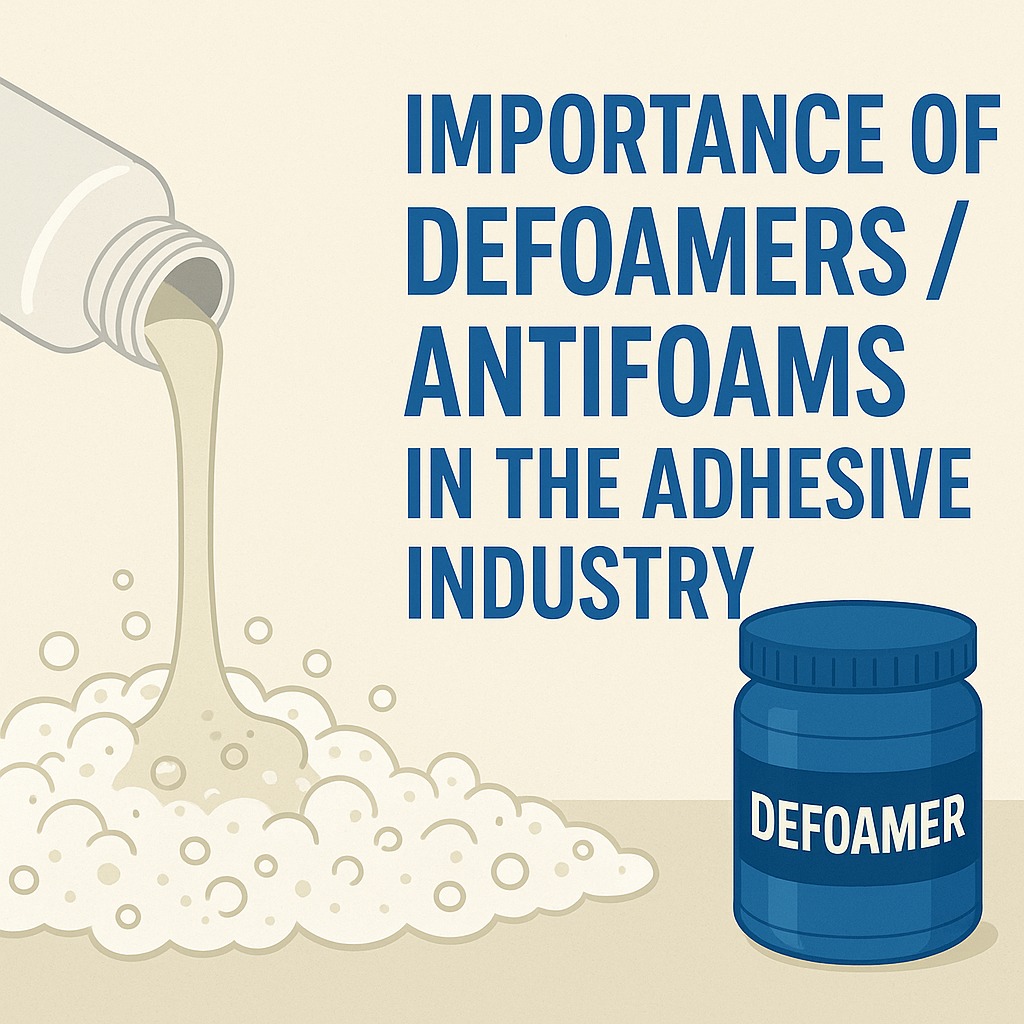
The Critical Role of Defoamers and Antifoams in the
Adhesive Industry
In the world of adhesives—whether water-based,
solvent-based, or hot-melt—the production process and final product performance
can both be severely impacted by foam formation. This is where defoamers (also
called antifoams) play a silent yet crucial role. Though they may form a small
percentage of the formulation, their impact on process stability, product
quality, and application efficiency is enormous.
Understanding
Foam: The Invisible Enemy
Foam is essentially a collection of gas bubbles trapped in
a liquid matrix. It is commonly generated during adhesive manufacturing and
application due to:
·
High-speed mixing
·
Pumping and filling operations
·
Surfactant use in formulations
·
Polymer emulsions or water-based binders that
inherently trap air
Key
problems caused by foam in adhesives:
·
Inconsistent viscosity
·
Surface defects
·
Poor bonding performance
·
Reduced wetting and penetration on substrates
·
Difficulty during application like roller,
spray, or brush
·
Metering and filling issues in packaging lines
How
Defoamers Work: Breaking the Foam Barrier
Defoamers act through a combination of spreading, bridging,
and penetration mechanisms:
·
Spreading: The defoamer spreads rapidly over
the foam surface.
·
Bridging: It creates a film over the bubble,
making it unstable.
·
Penetration: It enters the foam lamella,
disrupting the surface tension and causing the bubble to collapse.
The
key chemistries commonly used include:
·
Mineral oil-based defoamers
·
Silicone-based antifoams
·
Polymer-based defoamers
·
Vegetable oil-based eco-friendly defoamers
Importance
of Defoamers in Different Stages of Adhesive Manufacturing
1.
During Production
High-speed dispersion and polymer emulsification stages
generate intense foam. Defoamers help:
·
Maintain batch homogeneity
·
Prevent overflow and production downtime
·
Improve filler and pigment dispersion
·
Allow smooth pumping and filtration
2. During Storage
Foam can persist long after production. Entrapped air leads
to:
·
Storage stability issues
·
Volume inconsistencies
·
Settling and separation of solids
A good long-term persistent defoamer prevents re-foaming
during storage.
3. During Application
Foam during adhesive application leads to poor wetting,
bonding failures, and surface defects. This is especially critical in:
·
Woodworking adhesives
·
Pressure-sensitive adhesives (PSA)
·
Construction adhesives
·
Packaging laminating adhesives
·
Textile and paper lamination
Here, low-viscosity, quick-release antifoams ensure a defect-free
application.
Eco-Friendly
and Regulatory Trends
Modern adhesive formulators are under increasing pressure
to:
·
Reduce VOC emissions
·
Eliminate hazardous materials
·
Comply with REACH, RoHS, and other global
regulations
This has led to rising demand for VOC-free, APEO-free,
silicone-free, and vegetable oil-based defoamers that meet green-label
standards without sacrificing performance.
Small
Addition, Big Impact
In the adhesive industry, foam may seem like a small issue,
but if not addressed, it can lead to big production headaches, poor product
quality, and customer complaints. A well-selected defoamer ensures smooth
production, consistent quality, and trouble-free application.
Whether you’re producing packaging adhesives, woodworking
glues, or construction sealants - defoamers are the invisible heroes that make
your adhesives reliable and professional-grade.

Harmony Additives Private Limited is pleased to announce its participation in...
Continue Reading
In the world of printing, consistency, quality, and process efficiency are...
Continue Reading
Aqueous-based inks have gained popularity across industries - from packaging...
Continue Reading